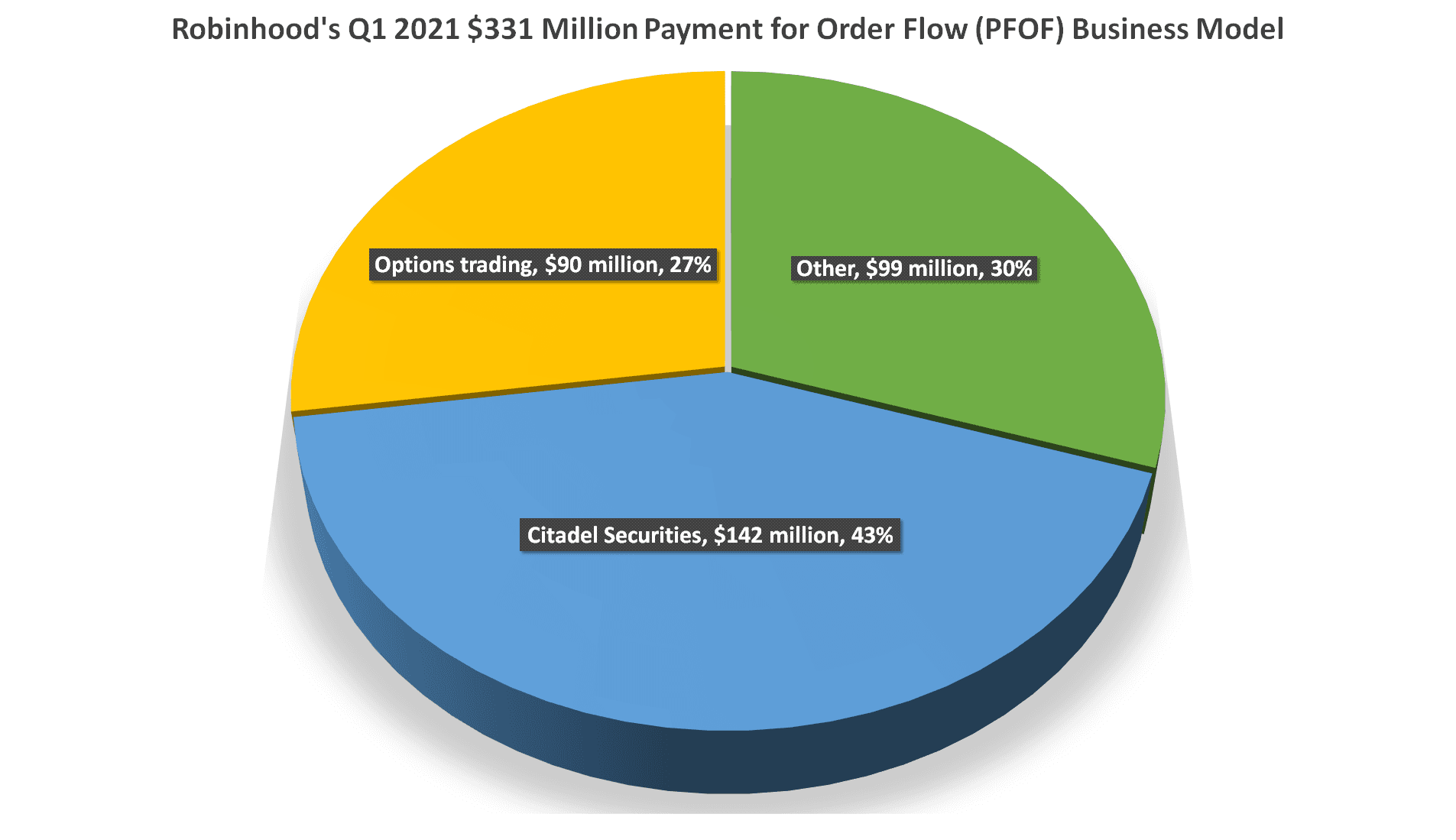
Robinhood's 'free trading' model works because Citadel Securities pays Robinhood hundreds of millions annually for the right to execute retail orders -- a practice called Payment for Order Flow (PFOF). Citadel handles over 40% of all U.S. retail stock orders. The arrangement means Citadel sees retail order flow before executing it, enabling systematic advantages. During GameStop, this relationship came under scrutiny when Robinhood restricted buying while Citadel had just invested in short-seller Melvin Capital.
“You are not Robinhood's customer -- you are the product. Your stock orders are being sold to high-frequency traders who profit by trading against you.”
From “crazy” to confirmed
The Claim Is Made
This is the moment they called it crazy.
When retail investors discovered in January 2021 that Robinhood had restricted their ability to buy GameStop shares during a historic market event, they weren't just angry—they were confused. Why would a brokerage designed for everyday traders suddenly block everyday traders? The answer traced back to a relationship most people didn't know existed: Citadel Securities was paying Robinhood hundreds of millions of dollars annually to execute those trades.
This wasn't a secret in the financial industry. Payment for Order Flow, or PFOF, has been a standard practice for decades. Retail brokerages like Robinhood receive cash from market makers like Citadel Securities for routing customer orders through them rather than to public exchanges. When Robinhood advertised "free trading," this was the business model that made it free—investors weren't paying commissions, but a third party was paying for access to their orders.
What wasn't widely understood was the structural advantage this created. Citadel Securities, which executes over 40% of all U.S. retail stock trades, sees the order flow before executing it. This means the firm gains visibility into what millions of retail investors are about to buy or sell. Critics argued this created an inherent conflict of interest: the entity profiting from these orders had an informational advantage and economic incentive to trade against them.
Wall Street's response was predictable. The industry argued PFOF actually benefits retail investors by keeping commissions low. Exchanges and brokerages defended the practice as transparent and legal. Citadel itself maintained that seeing order flow didn't constitute unfair trading—execution prices remained competitive. Regulators like the SEC had largely accepted these arguments for years.
Then came January 2021. When GameStop's stock exploded due to coordinated retail buying, Robinhood restricted purchasing—ostensibly due to capital requirements. But the timing was suspicious: the restriction occurred while Citadel had just invested approximately $2 billion in Melvin Capital, a hedge fund heavily short GameStop. Congressional hearings followed, and suddenly the relationship between Robinhood and Citadel became front-page news.
The American Prospect's reporting revealed just how dependent Robinhood had become on Citadel. The brokerage received roughly 40% of its revenue from order flow payments, with Citadel being a primary source. This wasn't predatory lending or hidden fraud—it was documented in regulatory filings and industry reports. What changed was public awareness that their broker's "free" service meant their orders were effectively being sold to their natural counterparty.
Since then, the evidence has only solidified. Securities filings, Congressional testimony, and investigative journalism have confirmed the basic structure of the original claim. Citadel does execute the vast majority of retail orders. It does receive advance visibility of this flow. It does profit significantly from price discrepancies. Whether this amounts to "stealing," as some critics contend, remains a matter of interpretation—but the mechanisms enabling systematic profit extraction are now undeniable.
This matters because it represents a fundamental breakdown in market transparency and retail investor trust. For years, millions of people thought they were participating in a democratized market while using a platform whose revenue model depended on their orders being advantageous to process. The claim that wasn't believed—that retail traders were being systematically disadvantaged—turned out to be partially true. The question now is whether regulators will finally address what the market already knew.
Get the 5 biggest receipts every week, straight to your inbox — plus an exclusive PDF: The Top 10 Conspiracy Theories Proven True in 2025-2026. No spam. No agenda. Just the papers they couldn't hide.
You just read "Robinhood sells your stock orders to Citadel Securities, whi…". We send ones like this every week.
No one's said anything yet. Be the first to drop your take.