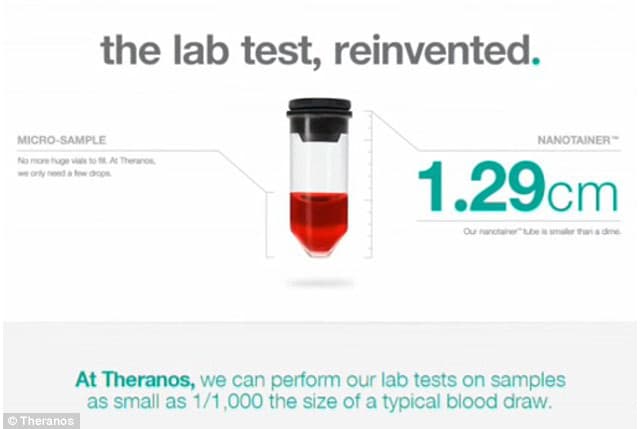
Elizabeth Holmes founded Theranos in 2003 claiming to revolutionize blood testing with tiny finger-prick samples. The company reached a $9 billion valuation. In reality, the Edison machine could only perform 12 of 200 advertised tests; most samples were secretly run on commercial third-party analyzers. Holmes personally falsified validation reports and forged documents claiming Pfizer and Schering-Plough had validated the technology. Whistleblowers and WSJ journalist John Carreyrou exposed the fraud in 2015. Holmes was convicted on four counts of wire fraud and sentenced to 11 years and 3 months in prison.
“Theranos's technology doesn't work. They're running most tests on commercial machines while claiming it's their revolutionary technology. Patient results are unreliable and dangerous.”
From “crazy” to confirmed
The Claim Is Made
This is the moment they called it crazy.
When Elizabeth Holmes founded Theranos in 2003, she made a promise that seemed almost too good to be true: a machine that could run hundreds of blood tests from just a finger-prick sample, faster and cheaper than any existing technology. The promise was seductive enough to attract major investors, partnerships with pharmacy chains, and a valuation that eventually reached $9 billion, making Holmes the world's youngest self-made female billionaire.
What made the claim credible wasn't just the vision—it was Holmes herself. She cultivated a carefully constructed image, adopting Steve Jobs's all-black turtleneck aesthetic and positioning herself as a Silicon Valley visionary disrupting an ancient industry. The company's Edison machine became the centerpiece of a narrative about innovation that captured imaginations and opened wallets. Theranos announced partnerships with major pharmaceutical companies and made deals to place testing devices in Walgreens and Safeway stores. On paper, the company appeared to be on the verge of transforming healthcare.
For years, skepticism was dismissed or suppressed. Theranos operated with extreme secrecy, citing trade secrets and intellectual property protection. When questions arose about the technology's capabilities, the company pushed back hard. Employees who raised concerns were threatened with legal action. The narrative Holmes had built was powerful enough that few outside the company dared challenge it publicly.
The unraveling began in 2015 when Wall Street Journal reporter John Carreyrou published an investigation that revealed the truth: the Edison machine could only perform 12 of the 200 tests Theranos claimed it could run. Most blood samples analyzed for patients weren't processed by Theranos's proprietary technology at all—they were being run on standard commercial analyzers from other manufacturers, secretly. The company had essentially been running a shell operation, taking in samples and sending them elsewhere while charging patients and insurers as though their revolutionary machine was doing the work.
Get the 5 biggest receipts every week, straight to your inbox — plus an exclusive PDF: The Top 10 Conspiracy Theories Proven True in 2025-2026. No spam. No agenda. Just the papers they couldn't hide.
You just read "Theranos's revolutionary blood testing technology was entire…". We send ones like this every week.
No one's said anything yet. Be the first to drop your take.
Confirmed: They Were Right
The truth comes out. Officially documented.
Confirmed: They Were Right
The truth comes out. Officially documented.
Further investigation uncovered that Holmes had gone beyond merely overselling the technology's capabilities. She had personally falsified validation reports and forged documents claiming that pharmaceutical giants Pfizer and Schering-Plough had validated the Edison machine. Neither company had actually done so. Holmes had committed fraud not through negligence or optimism, but through deliberate deception.
Whistleblowers, including former employees and company insiders, corroborated Carreyrou's reporting and provided internal documentation that confirmed the scope of the fraud. The evidence was overwhelming and specific—not vague allegations but concrete proof of falsified documents and misrepresented capabilities.
In 2022, Holmes was convicted on four counts of wire fraud and sentenced to 11 years and 3 months in prison. Theranos shut down. Investors lost billions.
The Theranos fraud matters because it exposed how charisma and narrative can override due diligence in high-stakes industries. It showed that regulatory oversight can fail when a company is sufficiently secretive and legally aggressive. It demonstrated that even sophisticated investors can be deceived by a compelling story. Most importantly, it revealed what happens when someone willing to commit fraud has access to healthcare data and decision-making. The public trusted Theranos with their blood samples and their health information based on claims that were entirely false.
Beat the odds
This had a 0.3% chance of leaking — someone talked anyway.
Conspirators
~100Network
Secret kept
7.8 years
Time to 95% exposure
500+ years