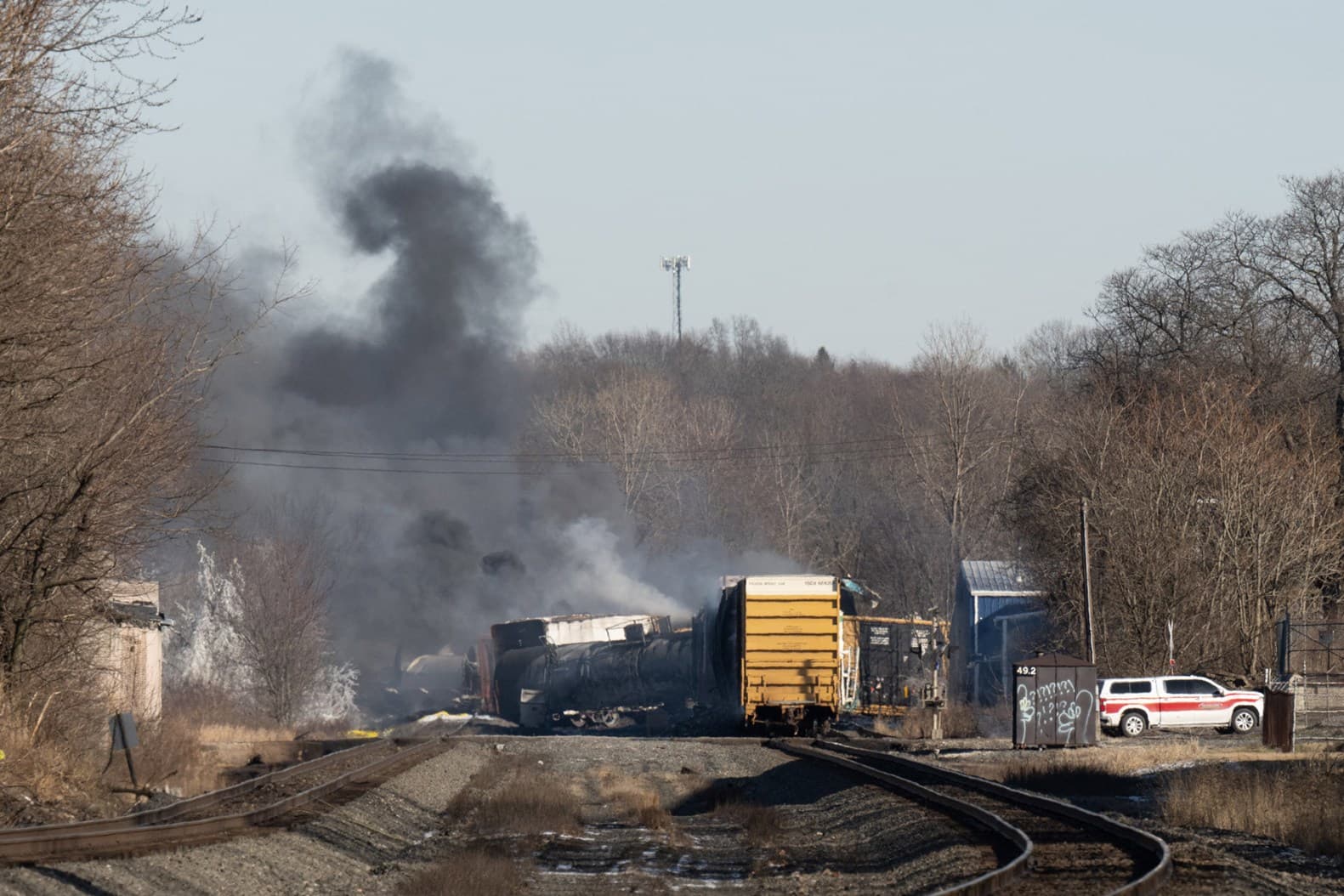
On February 3, 2023, a Norfolk Southern train carrying hazardous chemicals derailed in East Palestine, Ohio. Officials conducted a 'controlled burn' of five tanker cars of vinyl chloride — a known carcinogen — releasing a massive toxic plume. The EPA initially told residents it was safe to return within days. Independent testing later found elevated levels of dioxins and other toxins. EPA delayed comprehensive dioxin testing for months. Residents reported dead pets, skin rashes, and respiratory problems. Norfolk Southern had lobbied against enhanced braking requirements that might have prevented the derailment.
“They burned cancer-causing chemicals in the open air, told us it was safe, then waited months to test for dioxins. Our pets are dying and we can't sell our homes.”
From “crazy” to confirmed
The Claim Is Made
This is the moment they called it crazy.
When a Norfolk Southern train carrying hazardous chemicals derailed near East Palestine, Ohio on February 3, 2023, officials faced an immediate crisis. They chose to burn five tanker cars of vinyl chloride — a chemical known to cause cancer — releasing a massive toxic plume into the air. What followed was a textbook case of regulatory delays and public reassurance that preceded evidence suggesting those reassurances were premature.
The controlled burn was presented as the safest option to prevent a potentially catastrophic explosion. Within days, the EPA told residents it was safe to return to their homes and that air quality had returned to acceptable levels. Norfolk Southern and state officials echoed these assurances, urging people not to panic. The message was clear: the situation was under control, the danger had passed, and life could resume normally.
But residents weren't convinced. They reported dead pets, skin rashes, respiratory problems, and chemical odors persisting long after officials declared the air safe. Independent testing undertaken by residents and local organizations began finding elevated levels of dioxins and other toxic compounds in soil and water samples around East Palestine. These weren't minor traces — they were significant enough to warrant serious public health concern.
The EPA's response to these findings was telling. Rather than immediately launch comprehensive dioxin testing across the affected area, the agency delayed such testing for months. When testing finally occurred, it confirmed what residents had suspected: dioxins from the controlled burn had indeed spread beyond what initial assessments suggested. The chemical composition of the plume was more complex and more dangerous than officials had initially disclosed.
This delay mattered enormously. During those months when comprehensive testing was absent, residents continued living in uncertainty. Children played in contaminated soil. Families consumed food and water from potentially affected sources. The window for early intervention and precautionary measures — which experts recommend in toxic exposure cases — had closed.
Get the 5 biggest receipts every week, straight to your inbox — plus an exclusive PDF: The Top 10 Conspiracy Theories Proven True in 2025-2026. No spam. No agenda. Just the papers they couldn't hide.
You just read "Norfolk Southern's controlled burn of vinyl chloride in East…". We send ones like this every week.
No one's said anything yet. Be the first to drop your take.
The broader context deepens the credibility questions. Investigations later revealed that Norfolk Southern had actively lobbied against enhanced braking requirements that safety experts believed could have prevented the derailment entirely. The company had prioritized cost savings over safety measures. When the disaster occurred anyway, the same regulatory structures that had allowed the company to avoid safety upgrades were now responsible for assessing the damage to the public.
What makes this case important for understanding institutional accountability is not whether anyone committed intentional fraud. Rather, it demonstrates how institutional incentives — regulatory agencies wanting to minimize panic, companies wanting to minimize liability, officials wanting to appear in control — can align to delay truth-telling even without outright conspiracy.
The residents of East Palestine were told a reassuring story that proved incomplete. They discovered this incompleteness through their own investigation and persistence, not through the agencies designated to protect them. That gap between official assurance and verified reality is what erodes public trust in institutions. When people learn that official channels downplayed genuine risks, they become less likely to believe official channels in future crises.
The question isn't whether the EPA deliberately lied. It's whether institutional caution, regulatory capture, and the pressure to minimize public alarm created a system where dangerous delays in testing and disclosure became standard practice. For residents dealing with long-term health consequences, the distinction between intentional deception and negligent delay may not matter much at all.
Beat the odds
This had a 0.3% chance of leaking — someone talked anyway.
Conspirators
~200Network
Secret kept
3.3 years
Time to 95% exposure
500+ years