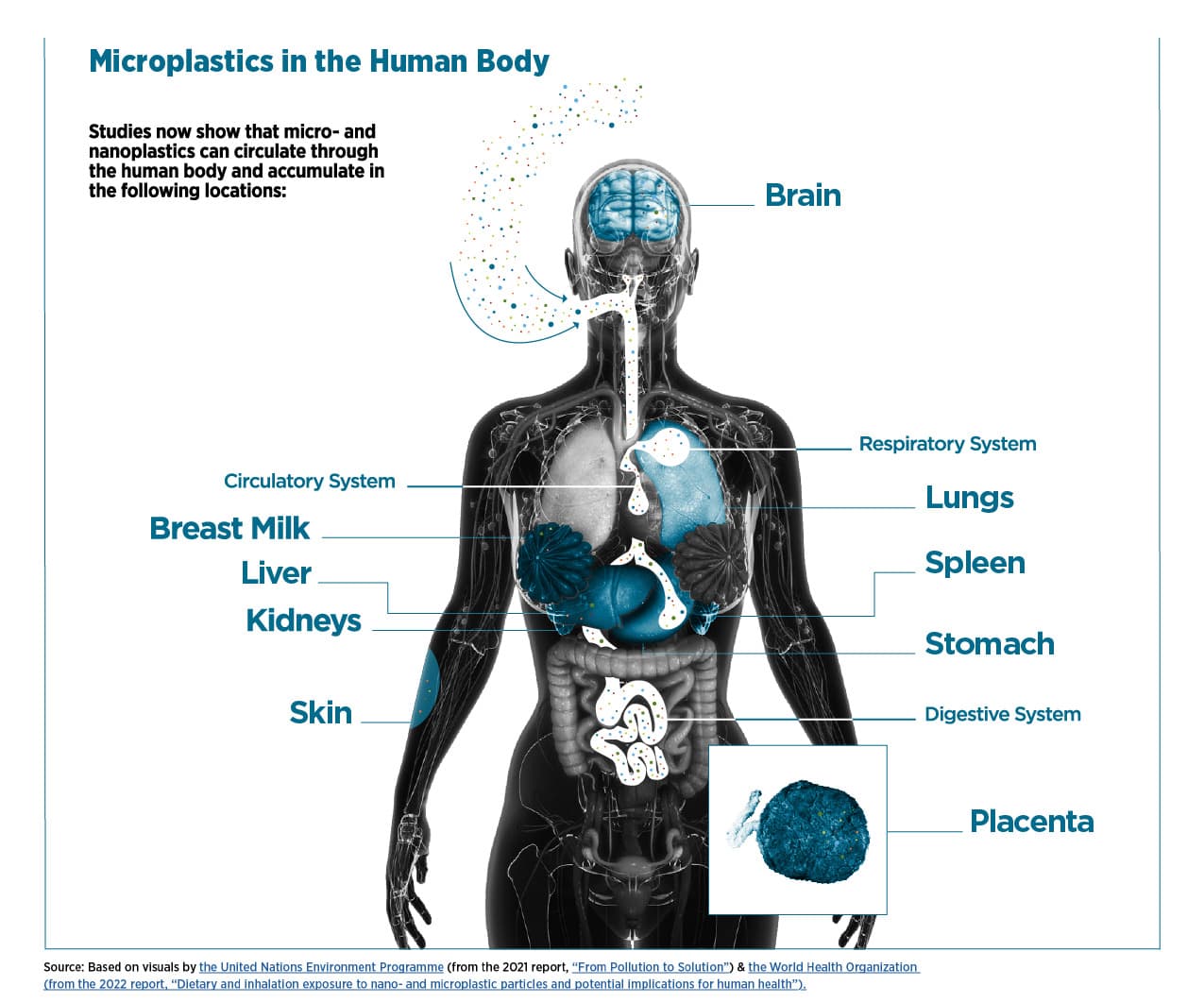
A Nature Medicine study found microplastics accumulate at higher levels in the human brain than in liver or kidneys, with concentrations increasing 50% between 2016 and 2024. Research confirmed nanoplastics breach the blood-brain barrier. Polyethylene was the dominant polymer found. Microplastic levels were 3-5x higher in brains of people diagnosed with dementia. What was dismissed as alarmism is now peer-reviewed science.
“Plastics are getting into our food, water, and bodies at dangerous levels, and nobody in power wants to address it.”
What they said vs. what the evidence shows
“Plastic products are rigorously tested for safety and meet all regulatory standards for consumer protection.”
— Plastics Industry Association · Jan 2019
SourceFrom “crazy” to confirmed
The Claim Is Made
This is the moment they called it crazy.
Confirmed: They Were Right
The truth comes out. Officially documented.
Confirmed: They Were Right
The truth comes out. Officially documented.
For years, environmental scientists raised alarms about microplastics infiltrating the human body through water, food, and air. The warnings were consistent and growing louder. Yet many institutions dismissed the concern as speculative—a premature panic before solid evidence existed.
That dismissal has become harder to defend.
A 2024 study published in Nature Medicine documented something that seemed almost incomprehensible: microplastics accumulate in human brain tissue at concentrations higher than in the liver or kidneys. This wasn't theoretical modeling or in-vitro experimentation. Researchers analyzed actual brain samples from deceased individuals and found measurable quantities of plastic particles lodged in neural tissue.
The scale of the problem appears worse than many anticipated. Between 2016 and 2024, microplastic concentrations in the human brain increased by approximately 50 percent. The dominant polymer identified was polyethylene—the same material used in plastic bags, bottles, and countless consumer products that end up in landfills and oceans. The research confirmed what laboratory studies had suggested: nanoplastics are small enough to breach the blood-brain barrier, a supposedly protective biological shield.
What makes this particularly significant is the correlation with neurological disease. Researchers discovered that microplastic levels were three to five times higher in brain samples from individuals diagnosed with dementia compared to those without the condition. While correlation doesn't prove causation, the finding raises urgent questions about whether plastic accumulation contributes to cognitive decline—or merely accompanies it.
The initial skepticism toward microplastic concerns wasn't entirely unreasonable. Scientific caution demands that we distinguish between legitimate warnings and unfounded speculation. Researchers understandably wanted to establish clear pathways and mechanisms before declaring a public health crisis. The problem was that caution sometimes morphed into dismissal, with critics characterizing warnings as alarmism rather than legitimate scientific inquiry.
But the evidence has accumulated steadily. National Geographic reported on the brain findings in detail, and CNN described the astonishing statistic that an average human brain now contains the equivalent of an entire spoon's worth of nanoplastics. These aren't fringe outlets; they're mainstream news organizations covering peer-reviewed research.
The implications extend beyond individual health concerns. This verification exposes a broader pattern in how institutions handle emerging environmental threats. Warnings about microplastics, forever chemicals, and other novel contaminants are often treated with institutional skepticism even when serious researchers are raising them. The burden of proof gets placed entirely on those sounding the alarm rather than on manufacturers and policymakers to demonstrate safety.
We should ask uncomfortable questions about this dynamic. How many environmental concerns have we dismissed prematurely? What institutional incentives lead us to require overwhelming evidence of harm before taking precautionary action? The microplastics finding suggests we may have gotten this calculation badly wrong.
This isn't a story about scientists being vindicated, though they were. It's a story about a system that was too slow to take seriously what was happening around us—in our water, in our food, and now, it appears, in our brains. The question now isn't whether microplastics are in human tissue. The question is what we do about it, and whether we'll respond differently to the next emerging threat that initially sounds too alarming to be true.
Get the 5 biggest receipts every week, straight to your inbox — plus an exclusive PDF: The Top 10 Conspiracy Theories Proven True in 2025-2026. No spam. No agenda. Just the papers they couldn't hide.
You just read "Microplastics have been found in human blood, brain tissue, …". We send ones like this every week.
No one's said anything yet. Be the first to drop your take.



Human brain samples contain an entire spoon's worth of nanoplastics (CNN)

