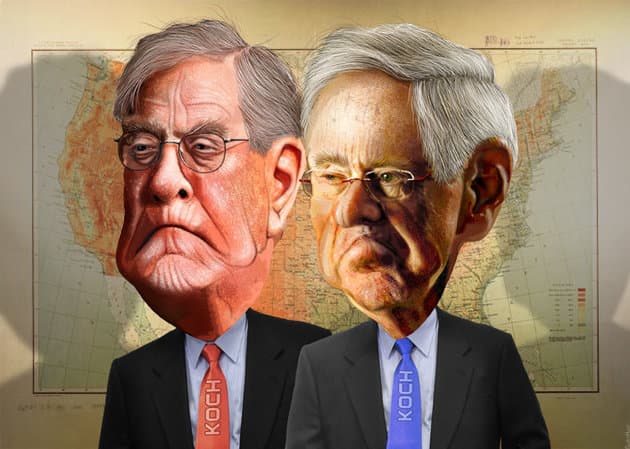
EPA investigation revealed Koch Industries knew about hundreds of pipeline leaks releasing oil and chemicals but failed to report violations. Internal documents showed systematic environmental compliance failures.
“Koch Industries maintains industry-leading environmental compliance and safety standards across all operations”
From “crazy” to confirmed
The Claim Is Made
This is the moment they called it crazy.
When environmental groups began raising alarms about Koch Industries' pipeline operations in the early 2000s, the company's response was dismissive. Koch maintained that it operated within regulatory guidelines and took environmental compliance seriously. Critics who suggested otherwise were labeled as activists pushing a predetermined narrative.
The narrative shifted significantly when the EPA launched a formal investigation into Koch Industries' pipeline network. What emerged from that investigation contradicted the company's public statements in substantial ways.
Internal documents obtained during the EPA's review revealed that Koch Industries had detected hundreds of pipeline leaks over a multi-year period. More damaging than the leaks themselves was what the company did—or rather, didn't do—about them. Rather than reporting these violations to federal regulators as required by law, Koch systematically failed to disclose the environmental releases.
The scope of the non-reporting was extensive. These weren't isolated incidents or honest mistakes scattered across a vast infrastructure. The pattern suggested institutional knowledge of the violations. Employees within Koch's operations had flagged these environmental failures repeatedly, yet the company maintained its posture of compliance to the outside world.
When the EPA finally settled with Koch Industries, the financial penalty reflected the seriousness of what investigators found. The settlement included admission of environmental violations related to oil and chemical releases. This wasn't ambiguous regulatory language—it was a formal acknowledgment that the company had violated environmental law.
What made this case notable wasn't that an industrial company made environmental mistakes. Accidents and violations happen across industries. What mattered was the deliberate pattern of non-disclosure. Koch Industries apparently calculated that hiding these violations was preferable to reporting them, absorbing the short-term regulatory consequences, and fixing the problems transparently.
The settlement documentation provided the paper trail that confirmed what skeptics had alleged. Internal communications showed management awareness of reporting obligations. Compliance failures weren't attributed to understaffing or miscommunication—they appeared systematic.
This case illustrates why documented evidence matters when evaluating corporate accountability claims. When environmental groups first raised concerns about Koch's practices, they had limited access to internal information. Their claims were treated skeptically by those who trusted the company's public statements. Only through formal government investigation and compulsory document production did the fuller picture emerge.
The implications extend beyond Koch Industries specifically. Large corporations with complex operations and deep resources can obscure environmental violations more effectively than smaller competitors. Without active regulatory oversight and the power to compel internal documents, violations might never surface. The fact that this one did suggests how many similar situations never receive public scrutiny.
For regulators, the case demonstrated that stated compliance policies mean little without consistent oversight. For the public, it underscored the gap between corporate public relations and internal practice. When companies can hide violations for extended periods, the regulatory system itself comes into question.
The Koch Industries settlement stands as documentation that sometimes people raising uncomfortable questions about corporate behavior are vindicated by evidence—not because they were activists with axes to grind, but because their questions pointed toward real violations that investigation confirmed.
Get the 5 biggest receipts every week, straight to your inbox — plus an exclusive PDF: The Top 10 Conspiracy Theories Proven True in 2025-2026. No spam. No agenda. Just the papers they couldn't hide.
You just read "Koch Industries Hid Pipeline Leak Environmental Violations". We send ones like this every week.
No one's said anything yet. Be the first to drop your take.