In the early 1990s, mass bee die-offs began near fields treated with Bayer's imidacloprid-based neonicotinoids in France. Internal emails revealed Bayer celebrated its 'Bee Care' program as a 'crisis PR strategy.' Lobbying documents show a decade-long industry effort to obstruct restrictions. The EU banned common neonicotinoids in 2013 (permanent in 2018). In the US, industry lobbied to block similar restrictions and cast themselves as part of the solution. Bayer quietly shut down the North American Bee Care Center in 2019.
“These pesticides are killing our bees. Every time we put hives near fields treated with neonicotinoids, the colonies collapse. Bayer knows this and is covering it up with fake 'Bee Care' programs.”
From “crazy” to confirmed
The Claim Is Made
This is the moment they called it crazy.
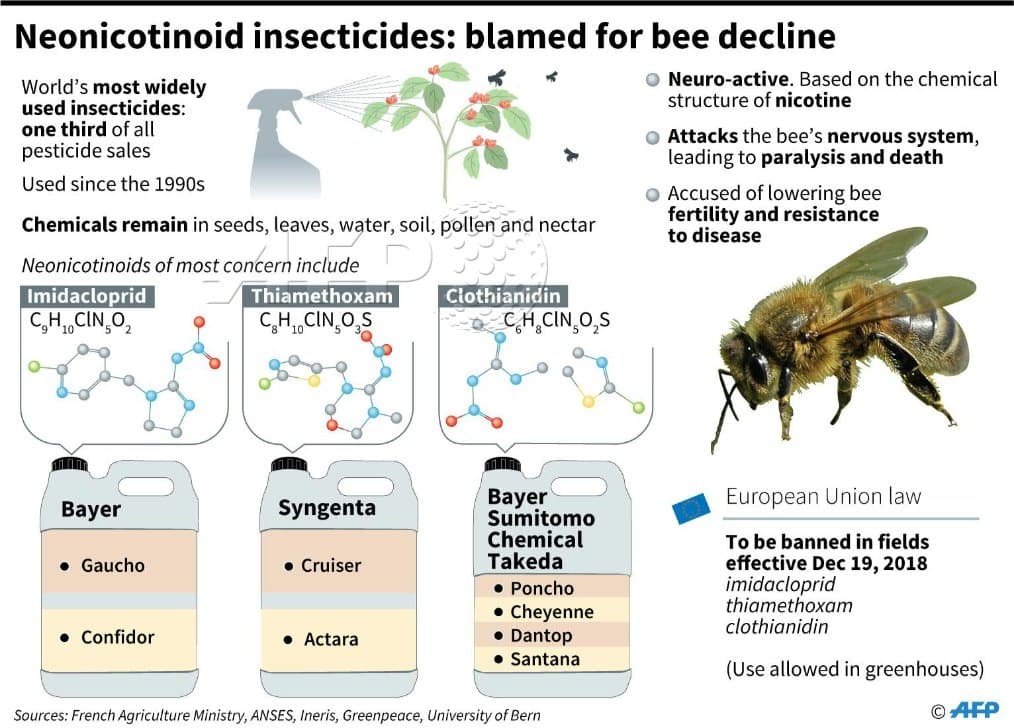
When French beekeepers began reporting catastrophic hive losses in the early 1990s, they pointed to a single culprit: Bayer's newly introduced imidacloprid pesticide. The chemical, marketed under the brand name Gaucho, was sprayed on sunflower and corn seeds across the country. Within years, beekeepers watched their colonies collapse by the thousands. The pattern was unmistakable to those in the field, yet the company denied any connection.
Bayer's official position was consistent and unwavering. The pesticide was safe. Independent studies showing harm were flawed. The bee die-offs had other explanations—disease, poor nutrition, beekeeping practices. The company stood by its product and its profits. Imidacloprid became one of the world's most widely used pesticides, part of a broader class of chemicals called neonicotinoids. By the 2000s, the family of chemicals was generating billions in annual revenue.
But documents that would later emerge told a different story. Internal Bayer emails, revealed through regulatory filings and investigations, showed the company understood the stakes of the bee crisis differently than it spoke publicly. The company had launched what it internally labeled the "Bee Care" program—framed to the world as a genuine commitment to bee health and research. In private communications, however, executives celebrated it as a "crisis PR strategy." The program wasn't designed to solve the problem; it was designed to manage the narrative around it.
The lobbying effort was equally deliberate. Industry documents obtained by investigative journalists at The Intercept revealed a coordinated, decade-long campaign to obstruct scientific restrictions on neonicotinoids. Bayer and its peers funded research, shaped policy discussions, and positioned themselves as partners in solving bee decline—all while resisting the one action that independent science increasingly suggested was necessary: removing the chemicals from use.
Europe eventually moved forward despite this pressure. The European Union implemented restrictions on the most widely used neonicotinoids in 2013, making them permanent in 2018. The scientific evidence had accumulated beyond the industry's ability to suppress it. Studies published in peer-reviewed journals documented the pesticides' neurotoxic effects on bee nervous systems, their persistence in soil and water, and their role in colony collapse disorder.
Get the 5 biggest receipts every week, straight to your inbox — plus an exclusive PDF: The Top 10 Conspiracy Theories Proven True in 2025-2026. No spam. No agenda. Just the papers they couldn't hide.
You just read "Bayer's neonicotinoid pesticides caused mass bee die-offs — …". We send ones like this every week.
No one's said anything yet. Be the first to drop your take.
Confirmed: They Were Right
The truth comes out. Officially documented.
Confirmed: They Were Right
The truth comes out. Officially documented.
In the United States, where Bayer's political influence remained stronger, the restrictions never came. The company continued lobbying to block similar bans, while maintaining its public image as a responsible corporate citizen concerned about pollinators. The North American Bee Care Center, the centerpiece of this PR effort, quietly shut down in 2019—notable primarily for its absence of any announcement.
What matters here extends beyond pesticides or even bees. This case reveals how a corporation can simultaneously acknowledge a crisis and actively obstruct its resolution. Bayer knew enough about imidacloprid's effects to create a PR response, yet not enough—publicly, at least—to change its behavior. The "Bee Care" program became a case study in how corporate communication can obscure rather than clarify, how appearing to address a problem can substitute for actually solving it.
For public trust, the lesson is clear: when a company most loudly proclaims its commitment to solving a problem, it may be worth asking what it's trying to make us stop noticing.
Beat the odds
This had a 1.9% chance of leaking — someone talked anyway.
Conspirators
~200Network
Secret kept
24.3 years
Time to 95% exposure
500+ years