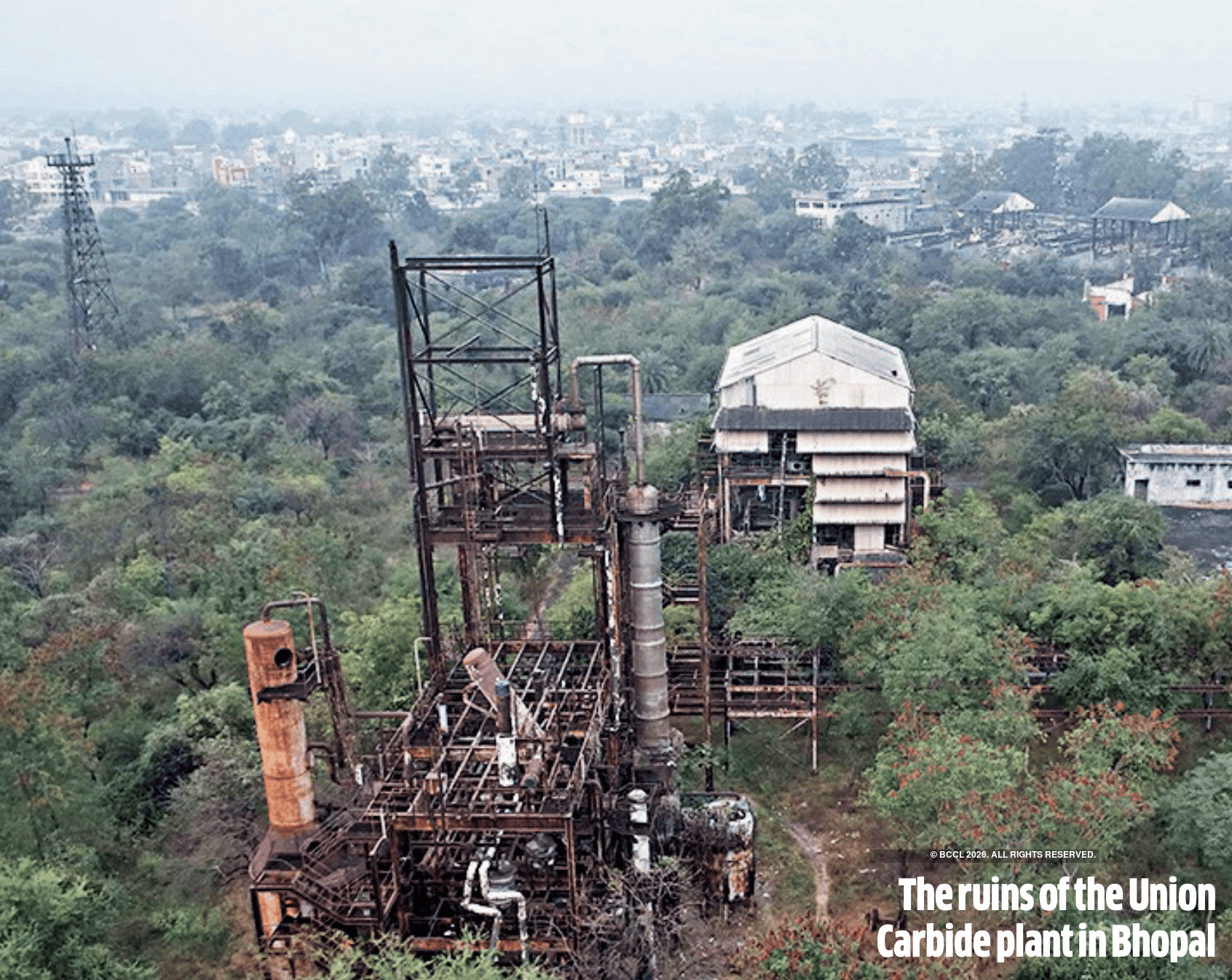
Internal Union Carbide audits from 1982 identified critical safety deficiencies at Bhopal plant. Company knew systems were inadequate but took no action before 1984 gas leak killed thousands.
“The Bhopal plant met international safety standards and the disaster was caused by sabotage”
From “crazy” to confirmed
The Claim Is Made
This is the moment they called it crazy.
On the night of December 3, 1984, a methyl isocyanate leak at the Union Carbide pesticide plant in Bhopal, India killed somewhere between 3,000 and 16,000 people—the exact number remains disputed. For decades, the company maintained that the disaster resulted from sabotage or unforeseeable circumstances. What internal documents later revealed, however, was far more damning: Union Carbide knew the plant's safety systems were dangerously inadequate years before the catastrophe occurred.
The claim that Union Carbide had documented knowledge of safety failures wasn't new. Survivors, journalists, and activist groups had long suggested the company cut corners on safety to maximize profits. What changed was access to evidence. Internal audits conducted by Union Carbide's own engineers in 1982—two years before the disaster—identified critical deficiencies in the plant's safety infrastructure, including inadequate cooling systems, corroded equipment, and insufficient maintenance protocols.
When confronted with these findings, Union Carbide's official response was defensive and dismissive. The company argued that the Bhopal facility operated under Indian regulatory standards, not American ones, and that it met all legally required safety benchmarks in India at the time. Company officials suggested that improvements would have been prohibitively expensive and that the identified risks were acceptable within the operating context. Union Carbide further emphasized that the immediate cause of the leak was sabotage—a claim that investigations have since contested or complicated.
The critical evidence proving the claim true came from Union Carbide's own records. The 1982 audit reports, later obtained through legal discovery and investigation, systematically documented problems that the company chose not to remediate. These weren't vague concerns or speculative risks. The audits identified specific equipment failures, inadequate backup systems, and training deficiencies. Most damning was that Union Carbide's own engineers explicitly recommended corrective actions—actions the company did not implement before 1984.
What makes this case particularly significant is the timeline. Union Carbide had approximately two years between identifying the safety gaps and the disaster to take corrective measures. The company had the resources, the technical knowledge, and the documented evidence of what needed to be fixed. They made a calculated decision that addressing these issues was less important than maintaining operational efficiency and profit margins.
The Bhopal case demonstrates a recurring pattern in industrial disasters: institutional knowledge of risk without corresponding action. Companies often conduct internal safety audits, identify problems, and then fail to address them—especially when the affected facilities operate in countries with weaker regulatory enforcement. The gap between what corporations know internally and what they claim publicly remains a persistent challenge to industrial accountability.
This matters beyond historical interest. The Bhopal case established that ignorance cannot be claimed as a defense when a company has documented knowledge. It challenged the assumption that regulatory compliance in any country absolves companies of responsibility for foreseeable harms. Most importantly, it reinforced why access to corporate internal documents—through legal action, regulatory oversight, or public records—remains essential for understanding whether institutions knew about dangers and chose inaction anyway. Without such access, corporations can maintain narratives of unavoidable tragedy. With it, the public can determine whether disaster resulted from negligence or inevitability.
Get the 5 biggest receipts every week, straight to your inbox — plus an exclusive PDF: The Top 10 Conspiracy Theories Proven True in 2025-2026. No spam. No agenda. Just the papers they couldn't hide.
You just read "Union Carbide Knew Bhopal Plant Safety Systems Were Inadequa…". We send ones like this every week.
No one's said anything yet. Be the first to drop your take.