“The Bhopal plant met international safety standards and the disaster was caused by sabotage by a disgruntled employee”
From “crazy” to confirmed
The Claim Is Made
This is the moment they called it crazy.
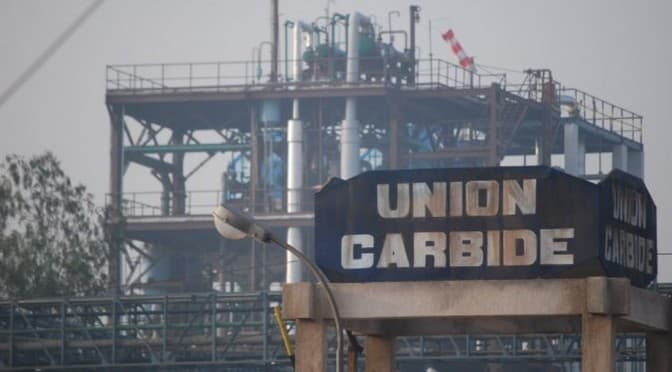
On December 3, 1984, a chemical leak at Union Carbide's pesticide plant in Bhopal, India killed thousands of people in what became one of history's worst industrial disasters. What emerged in the years that followed was something arguably worse than the accident itself: evidence that the company knew the danger was coming.
The claim that Union Carbide ignored known safety hazards at Bhopal gained traction almost immediately after the disaster, but it was dismissed by the company as speculation born from tragedy. Union Carbide maintained that the catastrophe resulted from sabotage and unforeseen circumstances, not negligence. The company's official narrative positioned the disaster as a regrettable but unforeseeable event—the kind of accident that happens when safety procedures fail in an instant.
What the company didn't immediately acknowledge was already sitting in its own files. Internal safety audits conducted in 1982, two years before the disaster, had identified multiple critical hazards at the Bhopal facility. These weren't vague concerns or minor observations. The audits specifically flagged the methyl isocyanate storage tank, the very vessel that would ultimately rupture and release toxic gas into the surrounding community.
The documented safety recommendations from these 1982 audits included equipment upgrades and enhanced safety systems. Yet Union Carbide never implemented most of them. When the company's own account of the disaster was eventually made public, it became clear why: cost. The corporation had prioritized expense reduction over the safety improvements its own engineers had deemed necessary. A plant operating in a country where labor was cheap and regulations were less stringent than in the United States was simply more profitable to run as-is.
The evidence didn't come from whistleblowers or investigative journalists alone, though their work was crucial in bringing these documents to light. Union Carbide's own official accounting of the incident, released under pressure, contained the damning details. The company had essentially documented its own negligence in real time, creating a paper trail that proved the hazards weren't unknown—they were identified, assessed, and then ignored.
This distinction matters profoundly. A tragedy caused by unforeseen circumstances is a disaster. A tragedy caused by known hazards that a company chose not to address is something closer to negligence, or worse. The families who lost loved ones, the survivors who suffered permanent injuries, and the community that was poisoned had been failed not by chance but by choice.
The Bhopal case remains instructive because it reveals how corporate accountability actually works in practice. Companies don't typically operate with malicious intent to harm people. They operate within a calculation of risk, cost, and profit. When safety upgrades cost money and the likelihood of a catastrophic failure seems remote enough, the math can point toward inaction. Union Carbide didn't wake up in 1982 and decide to kill thousands. They decided that the expense of fixing known problems didn't justify the perceived risk.
That's precisely why verified claims like this one deserve scrutiny and remembrance. They remind us that many disasters aren't unpredictable acts of fate. They're the foreseeable consequences of decisions made in corporate offices by people more concerned with balance sheets than with the safety of communities where they operate. The question that lingers is simple: how many similar decisions are being made right now in facilities around the world?
Get the 5 biggest receipts every week, straight to your inbox — plus an exclusive PDF: The Top 10 Conspiracy Theories Proven True in 2025-2026. No spam. No agenda. Just the papers they couldn't hide.
You just read "Union Carbide Knew of Bhopal Plant Safety Risks Years Before…". We send ones like this every week.
No one's said anything yet. Be the first to drop your take.