“Our vermiculite products pose no health risk when used as directed”
From “crazy” to confirmed
The Claim Is Made
This is the moment they called it crazy.
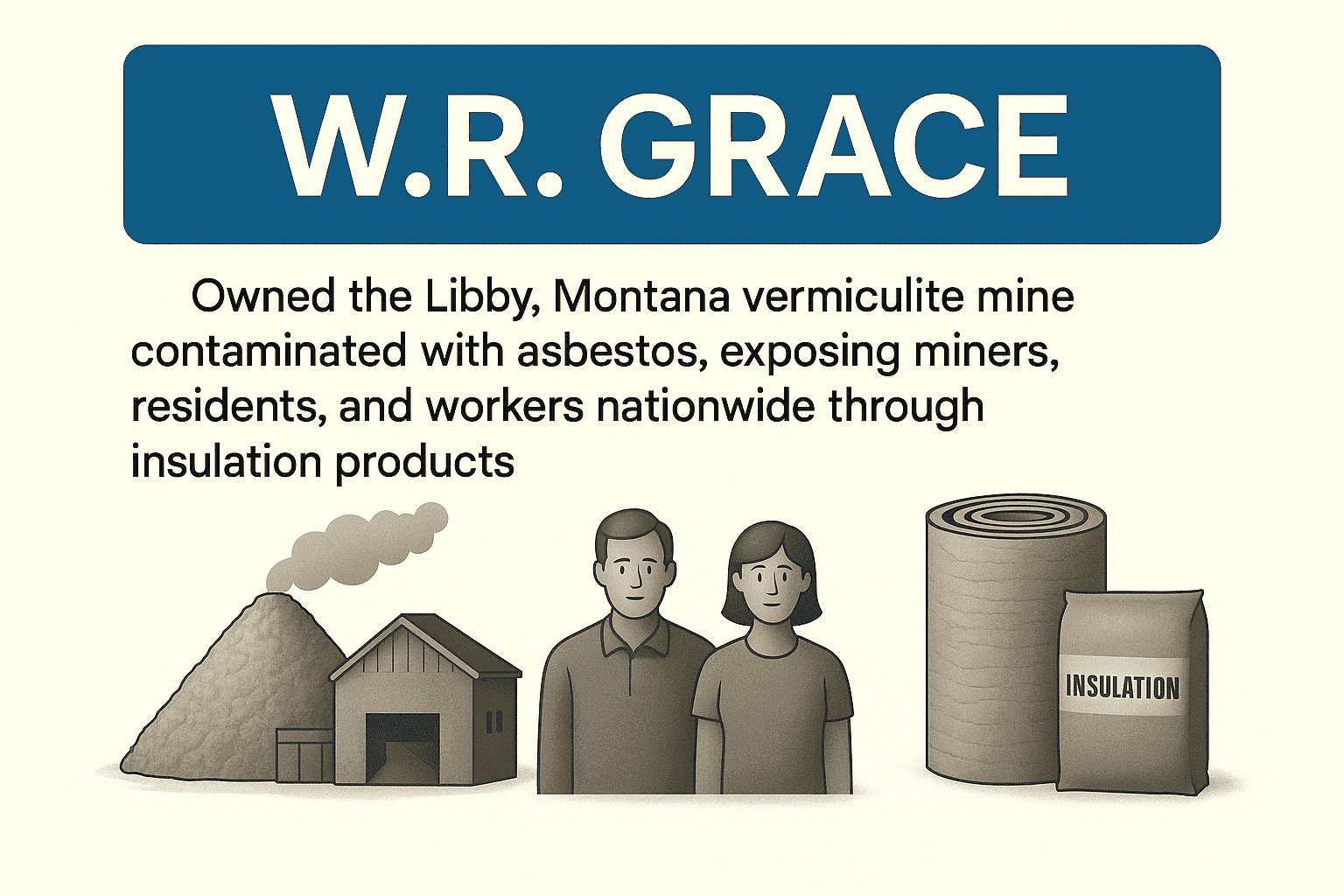
For nearly three decades, the small mining town of Libby, Montana became an unwitting experiment in what happens when a major corporation prioritizes profits over public health. W.R. Grace & Company operated a vermiculite mine there from 1963 to 1990, extracting ore that would eventually kill hundreds of residents—all while company officials knew the mineral was contaminated with a particularly dangerous form of asbestos.
The claim itself emerged gradually, not as a dramatic accusation but as a pattern of deaths that local doctors and residents couldn't ignore. People who had never worked at the mine were getting sick. Children who played in contaminated soil developed mesothelioma. Wives who washed their husbands' work clothes contracted asbestos-related diseases. Something in Libby's air and soil was killing people systematically.
When health officials first raised concerns, the official response was dismissive. Grace maintained that their operations were safe, that the asbestos contamination was minimal, and that any health problems were unrelated to the mine. The company's public position was reassuring: they were operating responsibly, following regulations, and there was no unusual health threat to the community. Local and state authorities initially accepted these assurances without aggressive independent investigation.
What changed everything was documentation. The EPA's investigation into the Libby Asbestos Superfund Site revealed internal Grace communications showing the company had known about the tremolite asbestos contamination dating back to the 1960s. Company officials were aware that vermiculite ore contained this deadly mineral. They understood the health risks. Yet operations continued for decades, with minimal disclosure to workers or the surrounding community.
The evidence was concrete. Soil samples confirmed widespread tremolite asbestos throughout Libby—in residential yards, on playground equipment, even in the dust that settled on homes. Medical studies documented an epidemic of asbestos-related illnesses: mesothelioma cases appeared at rates far exceeding national averages. The EPA's investigation found that Grace had conducted its own testing, identified the hazard, and chosen to proceed anyway. Internal documents showed awareness of the danger paired with decisions that prioritized operational continuity.
The death toll became impossible to ignore. By the time the Superfund designation came through, hundreds of residents had already contracted asbestos-related diseases. The exact number remains difficult to pin down—some estimates suggest over 400 deaths directly attributable to Libby's contamination, though the true figure may be higher given latency periods of asbestos-related illnesses.
Grace eventually settled litigation and entered into remediation efforts, but the damage was irreversible. Libby's story demonstrates a critical vulnerability in how we protect public health: the gap between what corporations know privately and what they disclose publicly. It shows how regulatory oversight can fail when companies control the information and authorities fail to independently verify claims.
What happened in Libby matters precisely because it wasn't an anomaly or accident. It was a conscious choice. When a major corporation knowingly exposed an entire community to a carcinogen for profit, and society's institutional checks failed to stop it, the implications extend far beyond one Montana town. It raises urgent questions about what other communities might be facing similar undisclosed risks right now.
Get the 5 biggest receipts every week, straight to your inbox — plus an exclusive PDF: The Top 10 Conspiracy Theories Proven True in 2025-2026. No spam. No agenda. Just the papers they couldn't hide.
You just read "W.R. Grace Knowingly Exposed Libby Montana to Deadly Asbesto…". We send ones like this every week.
No one's said anything yet. Be the first to drop your take.