Internal documents revealed that Exxon scientists accurately predicted global warming from CO2 emissions as early as 1977. Despite this knowledge, the company spent millions funding climate change denial organizations.
“Exxon has known about the link between fossil fuels and climate change since the 1970s and has deliberately funded disinformation to protect their business.”
From “crazy” to confirmed
The Claim Is Made
This is the moment they called it crazy.
Exxon's scientists knew. That's the simple, damning conclusion from thousands of pages of internal documents that reveal one of the most consequential corporate secrets of the modern era. In 1977, while the general public remained largely unaware of climate risks, researchers at Exxon's corporate laboratories had already concluded that burning fossil fuels was warming the planet—and they told their bosses exactly that.
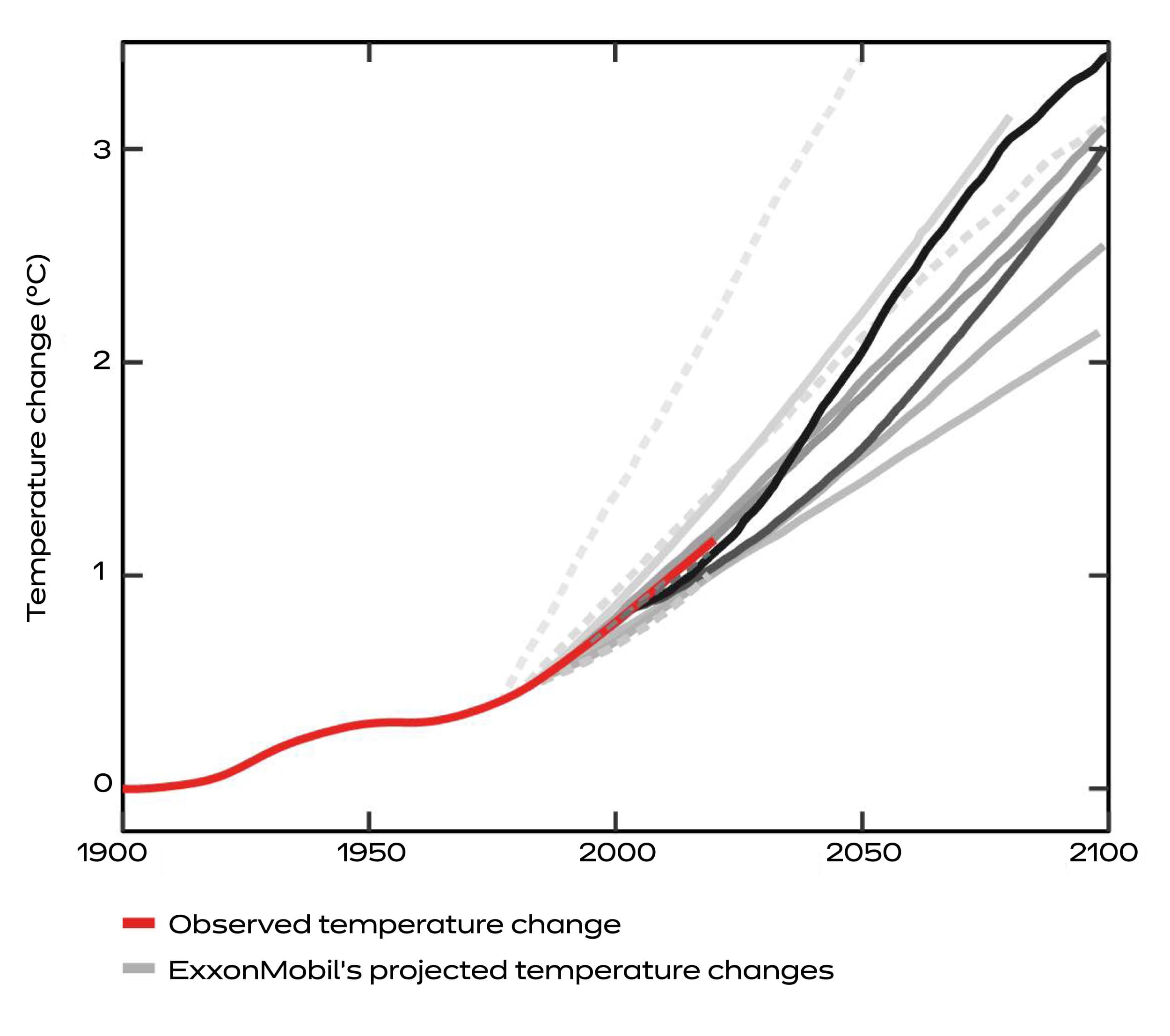
The company's own climate scientist, James Black, delivered a presentation to Exxon's management in which he stated with unusual certainty: "In the next few years, a new kind of climate may develop." He wasn't speculating. His research showed that doubling atmospheric CO2 would raise global temperatures by roughly 2 to 3 degrees Celsius. The science was sound. The conclusion was clear. The implications were existential.
Yet what happened next transformed a scientific breakthrough into something far more troubling. Exxon did not sound the alarm. The company did not mobilize its vast resources to transition away from fossil fuels or push for climate policy. Instead, for the next four decades, Exxon became one of the world's most effective funders of climate change denial.
For years, climate scientists and environmental advocates pointed to this contradiction and asked: How could Exxon simultaneously know the truth while publicly sowing doubt? The company's official response was dismissal. Exxon rejected accusations of hypocrisy, arguing that its internal discussions represented only preliminary research, not definitive proof. The company maintained that it was simply conducting legitimate scientific inquiry, nothing more. As recently as the 2000s, Exxon continued funding organizations that cast doubt on climate science—the very science its own employees had already validated.
Get the 5 biggest receipts every week, straight to your inbox — plus an exclusive PDF: The Top 10 Conspiracy Theories Proven True in 2025-2026. No spam. No agenda. Just the papers they couldn't hide.
You just read "Exxon's own scientists confirmed fossil fuel-driven climate …". We send ones like this every week.
No one's said anything yet. Be the first to drop your take.
Confirmed: They Were Right
The truth comes out. Officially documented.
Confirmed: They Were Right
The truth comes out. Officially documented.
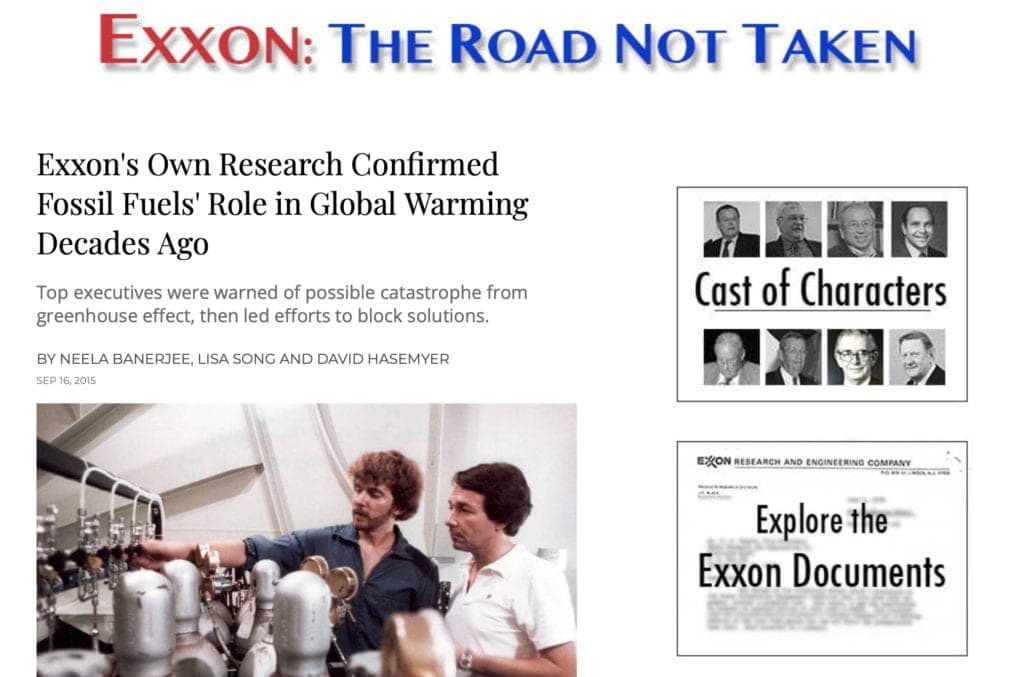
The evidence eventually became undeniable. In 2015, InsideClimate News obtained Exxon's internal documents and published "Exxon: The Road Not Taken," a comprehensive investigation showing that company scientists had produced accurate climate models decades before the public debate even began. A 1982 internal memo documented Exxon's understanding that CO2 from fossil fuels would warm the atmosphere. The company's own projections, remarkably, aligned with what we observe today.
This wasn't a matter of scientists disagreeing or evidence being unclear. Exxon's researchers understood the threat. Management understood the threat. And yet, the company chose a different path—one that protected short-term profits by manufacturing uncertainty in the public mind about long-term climate risks.
The significance extends beyond corporate malfeasance. This case reveals how institutional knowledge can be deliberately suppressed, how scientific expertise can be compartmentalized away from public discourse, and how enormous resources can be mobilized to contradict what an organization's own experts have already discovered. Exxon had the power to shape the global conversation about climate science, and it chose instead to delay action by a generation.
For public trust, the implications are sobering. If major corporations cannot be relied upon to act on their own scientific findings, and if they can spend decades funding the opposite message, then the question becomes: what other internal truths remain hidden? The Exxon documents didn't just prove a specific claim—they exposed a systematic failure of institutional integrity that demands serious reconsideration of how we hold corporations accountable for what they know.
Beat the odds
This had a 3% chance of leaking — someone talked anyway.
Conspirators
~200Network
Secret kept
38.7 years
Time to 95% exposure
500+ years