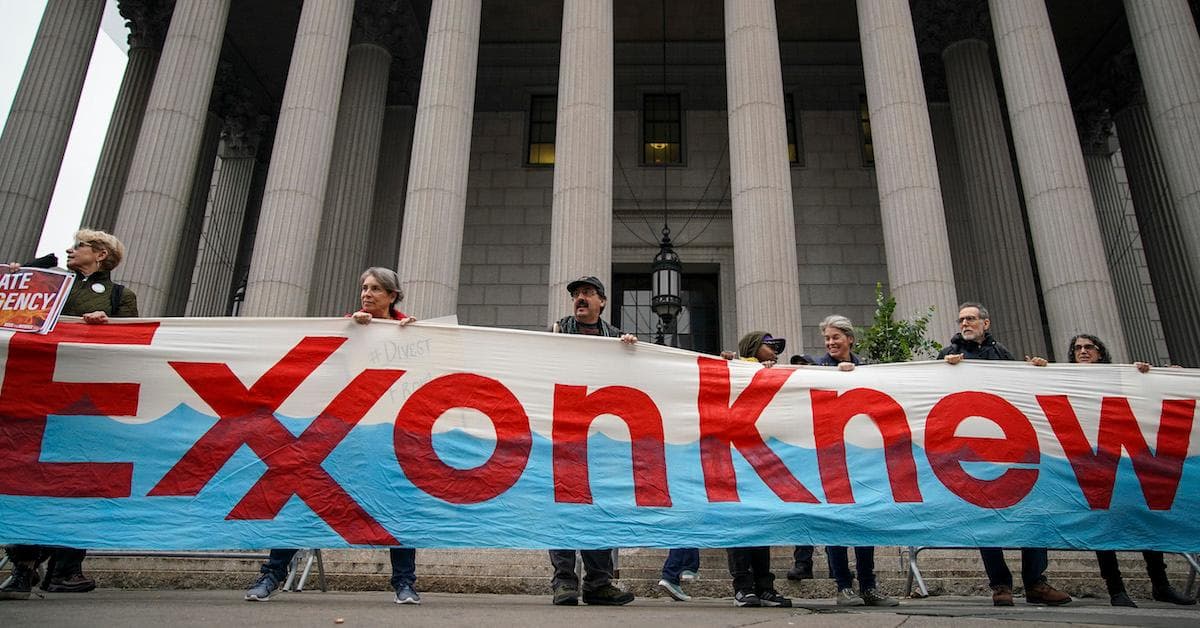
Internal Exxon documents revealed the company's scientists accurately predicted climate change impacts in the 1970s-80s while publicly funding climate denial campaigns. Company memos showed detailed climate modeling and risk assessments.
“The science of climate change is uncertain and requires more research before any policy actions”
From “crazy” to confirmed
The Claim Is Made
This is the moment they called it crazy.
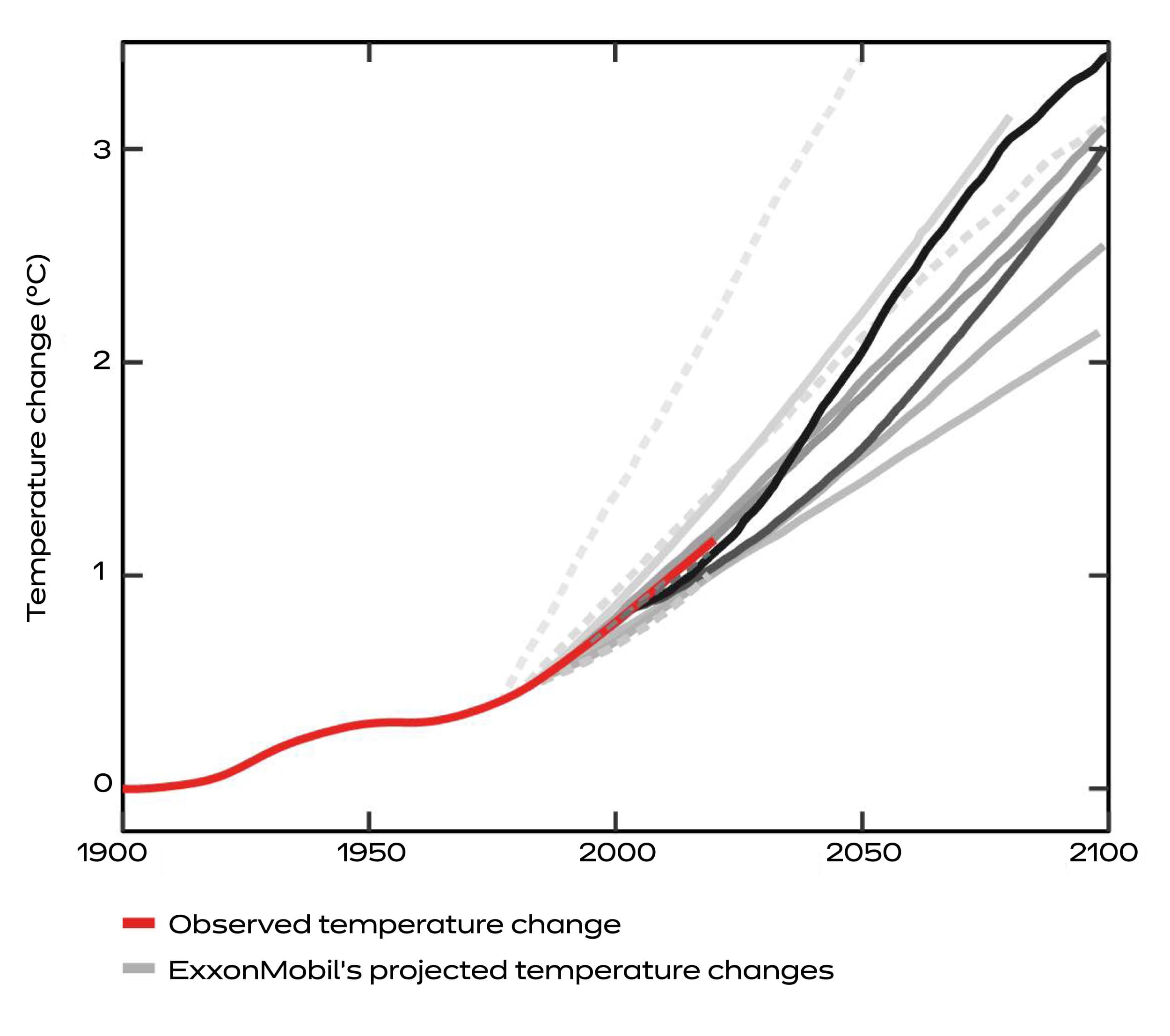
Exxon's own researchers were modeling climate change with remarkable accuracy in 1977. They predicted global temperature increases, sea level rise, and atmospheric CO2 concentrations that would later prove disturbingly close to what climate scientists would publicly warn about decades later. Yet while their internal teams were sounding alarms, the company's public position remained unchanged: climate science was uncertain, possibly exaggerated, and certainly not a reason to abandon fossil fuels.
This contradiction wasn't accidental. It was documented.
For decades, when confronted about Exxon's climate stance, company executives maintained they simply didn't have enough scientific certainty to act. The company pointed to legitimate scientific debate and the need for more research. Public statements emphasized their commitment to understanding environmental issues while continuing business as usual. This was the official narrative—one shared by industry peers and accepted by policymakers who argued that rushing into climate policy would be premature.
Then, in 2015, Inside Climate News published a landmark investigation based on internal Exxon documents obtained through research and interviews. The investigation revealed something far more troubling than negligence: the company had methodically studied climate risks, understood them clearly, and then systematically obscured those findings from the public.
Get the 5 biggest receipts every week, straight to your inbox — plus an exclusive PDF: The Top 10 Conspiracy Theories Proven True in 2025-2026. No spam. No agenda. Just the papers they couldn't hide.
You just read "Exxon Knew About Climate Change Risks Decades Before Public …". We send ones like this every week.
No one's said anything yet. Be the first to drop your take.
The evidence is specific and damning. Exxon scientists produced detailed memos and reports throughout the 1970s and 1980s laying out climate scenarios with projections for atmospheric CO2 levels and temperature increases. These internal documents showed the company understood feedback loops, ice sheet dynamics, and the potential for rapid climate shifts. One scientist's 1982 memo warned that a doubling of atmospheric CO2 would raise global temperatures by 2-3 degrees Celsius—a figure that aligns closely with modern climate science consensus.
Meanwhile, the company was funding organizations and campaigns that publicly questioned climate science. Exxon sponsored research that cast doubt on the human causes of climate change, supported industry groups that opposed climate policy, and maintained that the scientific consensus was weaker than it actually was. The company knew better because it had done the research itself.
This wasn't a case of scientists being ignored by a company. This was institutional knowledge being deliberately compartmentalized—with internal teams providing accurate risk assessments while public relations and political operations pushed a narrative of uncertainty. Decision-makers at the highest levels of the company had access to both the real science and the strategy to counter it publicly.
What matters here extends beyond corporate wrongdoing, though that's significant enough. This case illustrates how institutional knowledge can be weaponized against the public interest. Exxon possessed information that could have influenced decades of climate policy, public understanding, and individual decisions about energy. Instead, that information was buried while contradictory messaging was amplified.
The question isn't whether Exxon should have acted on its scientists' findings—though that would have been the ethical choice. The real question is what other institutions are sitting on uncomfortable truths today, and what frameworks we need to prevent this pattern from repeating. Trust in corporations, governments, and institutions depends on transparency. When organizations knowingly withhold information that affects public welfare, they don't just damage themselves. They corrode the foundation of informed democratic decision-making.
Beat the odds
This had a 0.8% chance of leaking — someone talked anyway.
Conspirators
~200Network
Secret kept
10.7 years
Time to 95% exposure
500+ years