A 1986 internal Shell report titled 'The Greenhouse Effect' accurately predicted global temperature rises and sea level changes from fossil fuel use. A 1988 confidential report warned of 'significant changes' to the earth. Despite this internal knowledge, Shell spent decades funding climate denial organizations and lobbying against emissions regulations. The company's own scientists' predictions have proven more accurate than many public models.
“Shell has known about climate change since the 1980s. Their own scientists warned them, and they chose to fund climate denial instead of acting.”
What they said vs. what the evidence shows
“The early research noted was part of our ongoing scientific inquiry. Shell supports the Paris Agreement and is committed to the energy transition.”
— Shell Corporate Communications · Apr 2018
SourceFrom “crazy” to confirmed
The Claim Is Made
This is the moment they called it crazy.
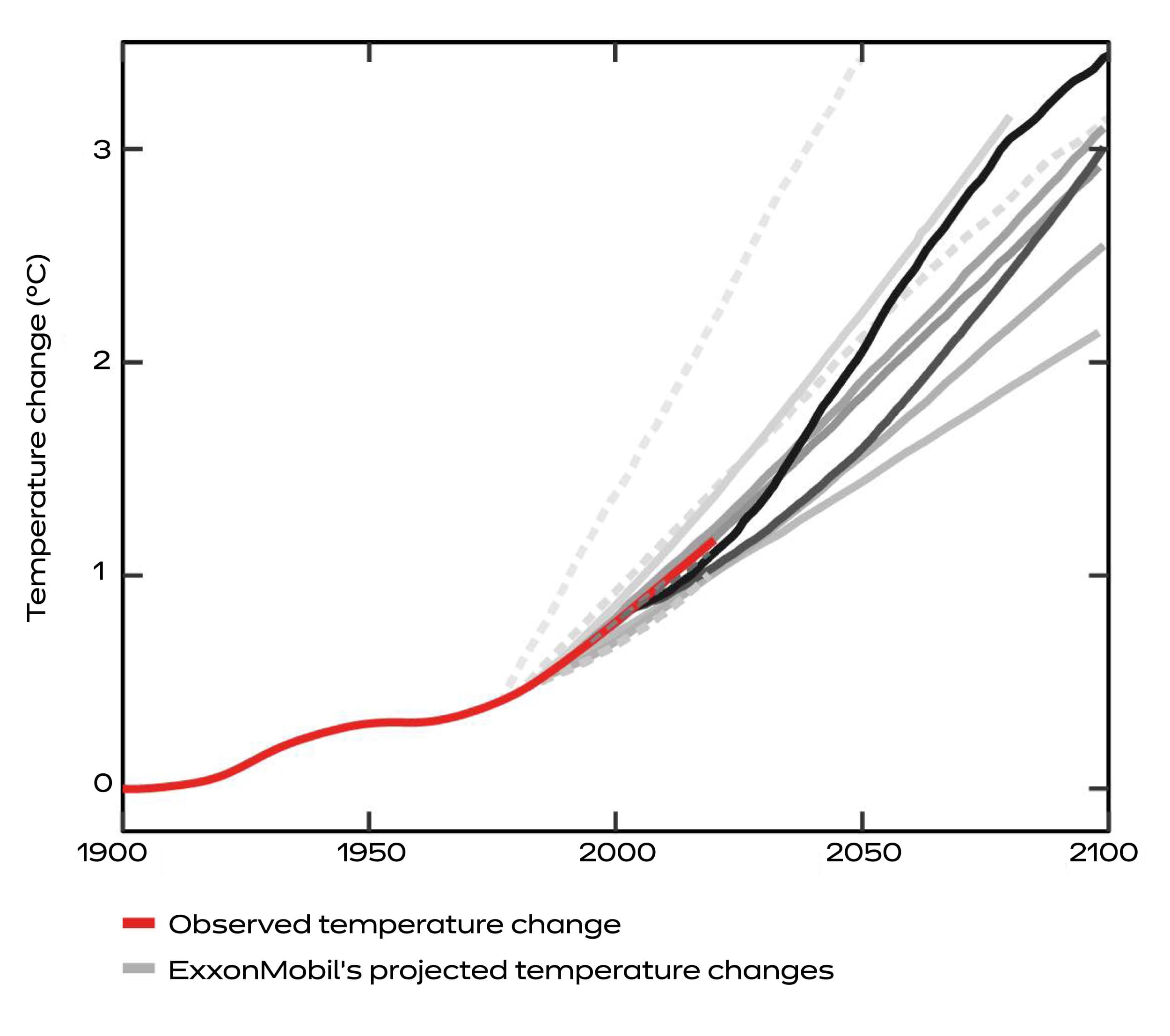
In 1986, Shell's own scientists completed an internal report titled "The Greenhouse Effect." They weren't hedging their bets or expressing uncertainty. They predicted that burning fossil fuels would raise global temperatures by 1.5 to 3 degrees Celsius within the next century and cause sea levels to rise measurably. By 1988, another confidential Shell report was even more direct, warning of "significant changes" to the earth's systems. These weren't tentative projections from fringe researchers—they came from one of the world's largest oil companies, analyzing their own industry.
What makes this remarkable is how accurate those predictions turned out to be. When compared against actual climate data decades later, Shell's 1986 models proved more precise than many of the public scientific projections that were circulating at the same time. The company's scientists understood the mechanism clearly: burn carbon, trap heat, change the climate. This wasn't theoretical. This wasn't controversial within Shell's research divisions.
Yet somewhere between those internal reports and public policy, something shifted. For the next three decades, Shell became a major funder of climate denial organizations and a consistent lobbying force against emissions regulations. The company that knew what was coming spent roughly the same period trying to convince policymakers and the public that the science was uncertain. Shell funded think tanks and front groups that cast doubt on climate research. The company's executives spoke publicly about the need for energy security and economic growth, rarely mentioning what their scientists had told them in confidence.
This wasn't ignorance. It wasn't a difference of scientific opinion. It was a choice.
The evidence comes from multiple sources: the original Shell documents themselves, recovered through investigative journalism; a 1991 film Shell produced internally that warned about climate impacts; and the stark contrast between what the company knew and what it publicly claimed about the science. The timeline is documented. The documents are real. The predictions check out against actual climate measurements from the decades that followed.
Get the 5 biggest receipts every week, straight to your inbox — plus an exclusive PDF: The Top 10 Conspiracy Theories Proven True in 2025-2026. No spam. No agenda. Just the papers they couldn't hide.
You just read "Shell's own scientists predicted climate change with remarka…". We send ones like this every week.
No one's said anything yet. Be the first to drop your take.
Confirmed: They Were Right
The truth comes out. Officially documented.
Confirmed: They Were Right
The truth comes out. Officially documented.
What makes this case particularly significant is that it wasn't unique to Shell. Similar internal acknowledgments have since been found at other major fossil fuel companies. ExxonMobil's own researchers produced comparable warnings decades before the company became synonymous with climate denial funding. These weren't isolated incidents of corporate knowledge—they suggest a pattern.
This matters because it goes to the heart of how society makes decisions about existential threats. If major industries possess credible scientific evidence about catastrophic risks but choose to obscure that evidence for profit, what does that mean for public trust in institutions? It means the information asymmetry wasn't accidental. It was manufactured.
The warming Shell predicted in 1986 is now happening. The sea level rise they anticipated is underway. And we're having this conversation about whether they should have told us—when they already knew.
Beat the odds
This had a 2.5% chance of leaking — someone talked anyway.
Conspirators
~200Network
Secret kept
31.9 years
Time to 95% exposure
500+ years